Is It Legal to Download Images From the Internet?

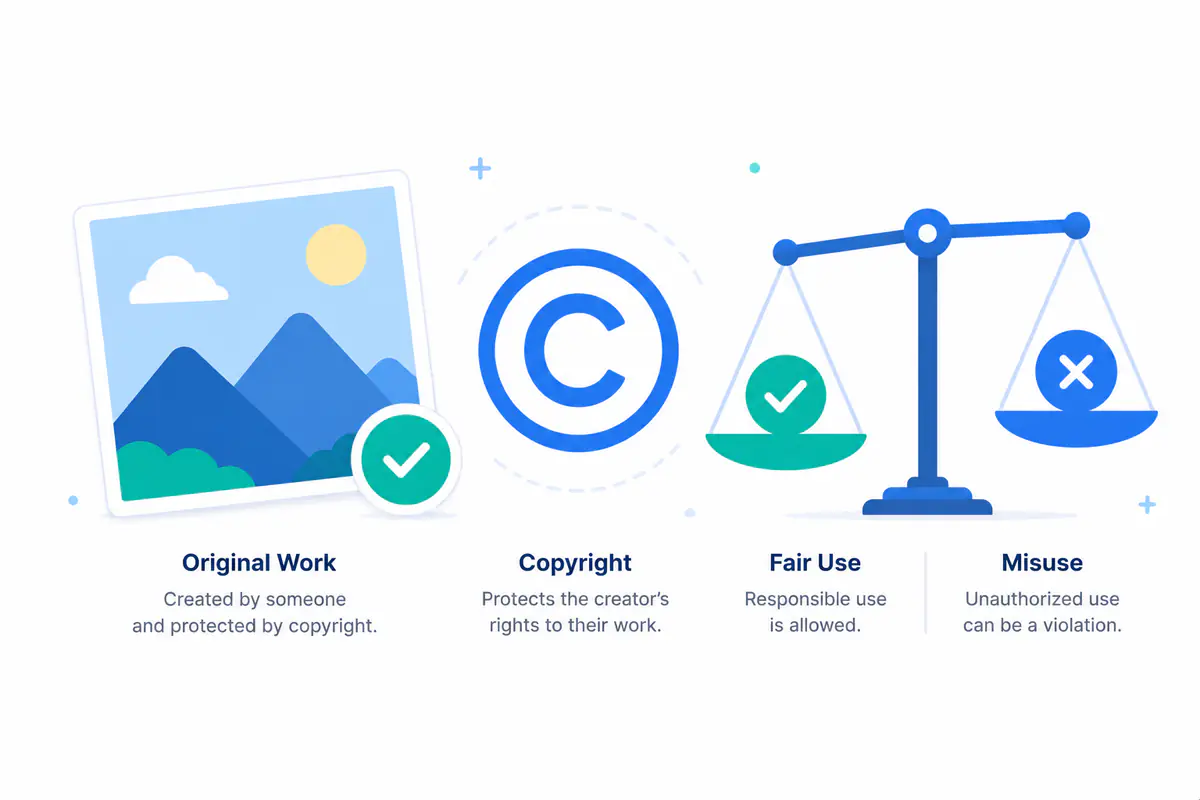
Is it legal to download images from the internet? The short answer is that downloading a picture for your own private use is usually fine, but using it, by posting, selling, or putting it on your own site, is where the law gets strict.
Almost every image online belongs to someone. Copyright applies the moment a photo is taken, whether or not it has a watermark or a copyright notice. So the fact that an image is easy to save doesn't mean you're free to do whatever you want with it.
This guide explains the difference between downloading and using an image, when it's allowed, when it isn't, and where to find pictures you can use without worry. It's general information, not legal advice, but it covers the rules most people need to know.
Downloading vs Using: The Key Difference
Most confusion about image copyright comes from mixing up two separate things.
Downloading is saving a copy of an image to your device. On its own, for private purposes, this is rarely a problem. Looking at a photo, saving it for reference, or keeping it in a personal folder doesn't harm the owner or make you money from their work.
Using is what happens next, and it's where copyright really applies. Publishing the image on your website, putting it in an ad, printing it on a product, or posting it as your own content are all uses that can require permission.
Think of it like a library book. Borrowing and reading it is fine. Photocopying it and selling copies is not. The image works the same way. The download is the easy part, and how you use it afterward is what decides whether you're within the law.
So when people ask if downloading images is legal, the honest answer depends less on the saving and more on what you plan to do with the file.
Is It Actually Illegal to Download an Image?
For personal use, downloading an image is almost never something you'll get in trouble for. Saving a photo to set as your wallpaper, keep in a moodboard, or use as a drawing reference falls well within what copyright allows in practice. No one is coming after you for that.
The picture changes when the download itself involves getting around protection. Saving images from a site you had to pay for and then sharing them, or bypassing paywalls and stock-photo previews to grab the full file, can cross a legal line even before you use the image. The download stops being innocent when it defeats something the owner put in place.
There's also a gray area worth knowing. Some websites' terms of service say you may not download their content at all, even for personal use. Breaking those terms isn't usually a copyright crime, but it can be a breach of contract with that site. In everyday practice this rarely leads to anything, but it's the reason a blanket "yes, it's always legal" would be wrong.
For most people saving public images for private, personal reasons, the honest takeaway is simple. The download itself is very low risk. What you do with the image next is what actually matters.
When You Can Legally Use an Image
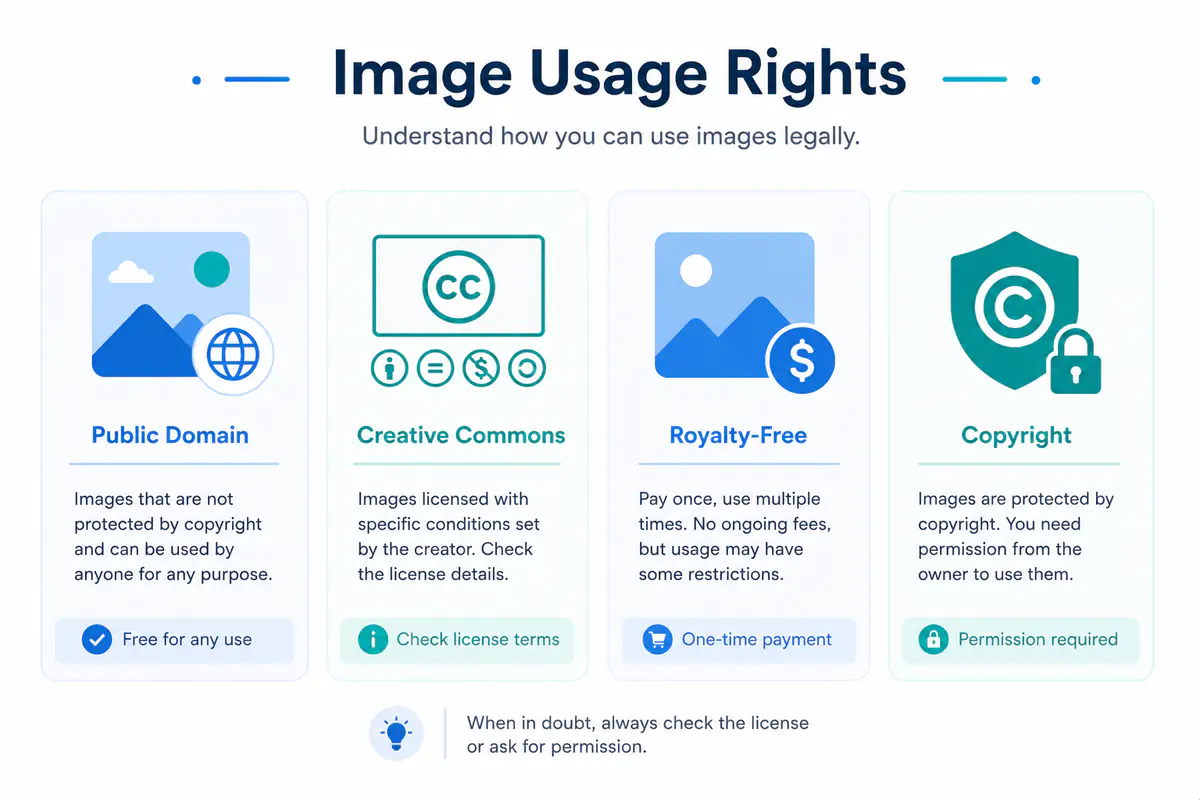
There are a few clear situations where you're free to use an image, not just download it.
Images you created. If you took the photo or made the graphic yourself, you own the copyright and can use it however you like.
Public domain images. These have no copyright, either because it expired or the creator waived all rights. In the US, works published before 1927 are public domain. Sites like Wikimedia Commons and government archives host many of them, and you can use them for anything, including commercial projects.
Creative Commons images. Creators release these under set rules. Some only ask that you credit them, others block commercial use or edits. Always read the specific license, since a CC image isn't a free-for-all. You can search for them through Creative Commons Search or filters on Flickr and Google Images.
Royalty-free and licensed stock. On sites like Shutterstock, Adobe Stock, or the free tiers of Unsplash and Pexels, you get a license to use the image under certain terms. Note that "royalty-free" means you pay once rather than per use, not that it costs nothing.
Images you have permission for. If you ask the owner and they agree, in writing, you're covered. This is the surest route for a specific photo you really want to use.
When You Cannot Use an Image
On the flip side, here are the uses that get people into trouble.
Publishing it as your own. Posting someone's photo on your blog, website, or social account without permission is copyright infringement, even if you credit them. Credit is not the same as a license.
Commercial use. Putting an image in an ad, on a product you sell, on packaging, or in marketing material almost always needs a proper license. This is the use owners protect most, because it's making money from their work.
Selling or redistributing it. Reselling an image, bundling it into a template, or offering it for download somewhere else is off limits unless the license clearly allows it.
Editing to disguise it. Cropping, filtering, or altering a copyrighted image doesn't make it yours. A modified copy is still based on the original and still infringes.
Assuming free means unrestricted. An image being free to download says nothing about your right to use it. Plenty of free images still carry copyright and clear limits on what you can do.
The common thread is simple. If your use competes with the owner or profits from their work without permission, it's very likely not allowed.
Where to Find Images You Can Use Freely
The easiest way to stay safe is to start from images that are cleared for use. Plenty of good ones are free.
Free stock sites. Unsplash, Pexels, and Pixabay offer high-quality photos you can use for personal and most commercial projects at no cost. Always skim their license page, since a few images have extra conditions, but the vast majority are ready to go.
Public domain libraries. Wikimedia Commons, the Library of Congress, and NASA's image archive hold huge collections with no copyright at all. These are ideal for historical, educational, or commercial work.
Creative Commons search. The Creative Commons website has a search tool that pulls openly licensed images from across the web. You can filter by whether you need commercial use or the right to edit.
Paid stock, when it matters. For a big campaign or a product you're selling, a paid license from Shutterstock or Adobe Stock buys peace of mind and clear terms. It's often worth it to avoid any question later.
Whatever the source, take ten seconds to check the license and, where asked, credit the creator. It's a small step that keeps you fully in the clear.
How to Check if an Image Is Copyrighted
There's no central database of image copyright, but a few checks tell you most of what you need.
Assume it's copyrighted by default. Almost every image is protected the moment it's made, with or without a notice. Treating everything as owned unless proven otherwise is the safe starting point.
Trace it to the source. Run the image through a reverse image search on Google Images or TinEye. This often finds the original creator or the stock site it came from, where the license terms are usually spelled out.
Read the page it lives on. The website hosting the image often states its terms in a footer, an image credit, or a licensing page. Stock and Creative Commons pages list exactly what you may do.
Check the metadata. Some photos carry copyright and creator details in their EXIF data. You can view this with a free tool, which our guide on how to view EXIF data walks through.
If you trace an image and still can't find clear permission, the safest move is to assume you don't have it and pick something else.
What Happens If You Use an Image You Shouldn't
Using a copyrighted image without permission has real consequences, though they range from mild to serious.
A takedown notice. The most common outcome is a DMCA takedown. The owner asks the host or platform to remove the image, and it comes down. Often that's the end of it, with no further penalty if you comply quickly.
A settlement demand. Some owners, and agencies that hunt for unlicensed use, send a letter asking for payment for the time the image was up. These can run from a few hundred to a few thousand dollars, and companies like Getty are known for pursuing them.
A lawsuit. Rare for small cases, but possible. Statutory damages for willful infringement can climb high, which is why businesses take licensing seriously.
Platform penalties. On marketplaces like Amazon or eBay, using images you don't own can get a listing pulled or an account flagged, separate from any legal action.
For a personal blog or a small project, the realistic risk is a takedown or a payment request rather than a courtroom. Still, it's a hassle and a cost that's easy to avoid by using cleared images from the start.
A practical rights check
Identify the creator or rights holder, find the license or written permission, and confirm that your planned use fits its conditions. Check commercial-use limits, attribution requirements, modification rules, and whether recognizable people or trademarks introduce separate concerns. Save a copy of the license and source page with the image.
Fair use is a case-specific legal doctrine, not a blanket label for images found online. Rules also vary by country. For a commercial campaign, disputed ownership, or a high-value publication, get qualified legal advice.
Related ExtractPics guides
- Image File Formats Explained
- How to Save Product Images From Websites
- What Is an Image Scraper? How It Works, Common Uses, and Is It Legal?
- How to Download Images From Any Website
Sources and verification
This article was reviewed against the following primary documentation and standards in August 2026:
- U.S. Copyright Office: fair use
- U.S. Copyright Office: copyright for visual artists
- Creative Commons: license types and conditions
Permission is the safest starting point
Private downloading and public reuse are different acts. Before publishing, selling, or advertising with an image, find a license that covers the intended use or get permission from the rights holder. Keep evidence of that permission. Public-domain and Creative Commons material can be useful, but their status and conditions still need to be checked file by file.
